

Home / School of Commerce / Department of Economics / B.Sc. Applied Economics
The B.Sc. Applied Economics programme combines the foundations of economic theory with quantitative, analytical and practical approaches to understanding real-world economic and social issues. The programme enables students to connect concepts from microeconomics, macroeconomics, statistics and econometrics with contemporary areas such as public policy, financial economics, environmental economics, behavioural economics and sustainable development.
With emphasis on data analysis, research, internships and experiential learning, the programme prepares students to interpret economic evidence, evaluate policies and apply analytical skills to diverse professional and societal contexts.
Strong emphasis on statistics, econometrics, data interpretation and analytical tools.
Exposure to public policy, financial economics, environmental economics, behavioural economics and sustainable development.
Internships, research projects, field-based learning, discussions, competitions and practical software training.
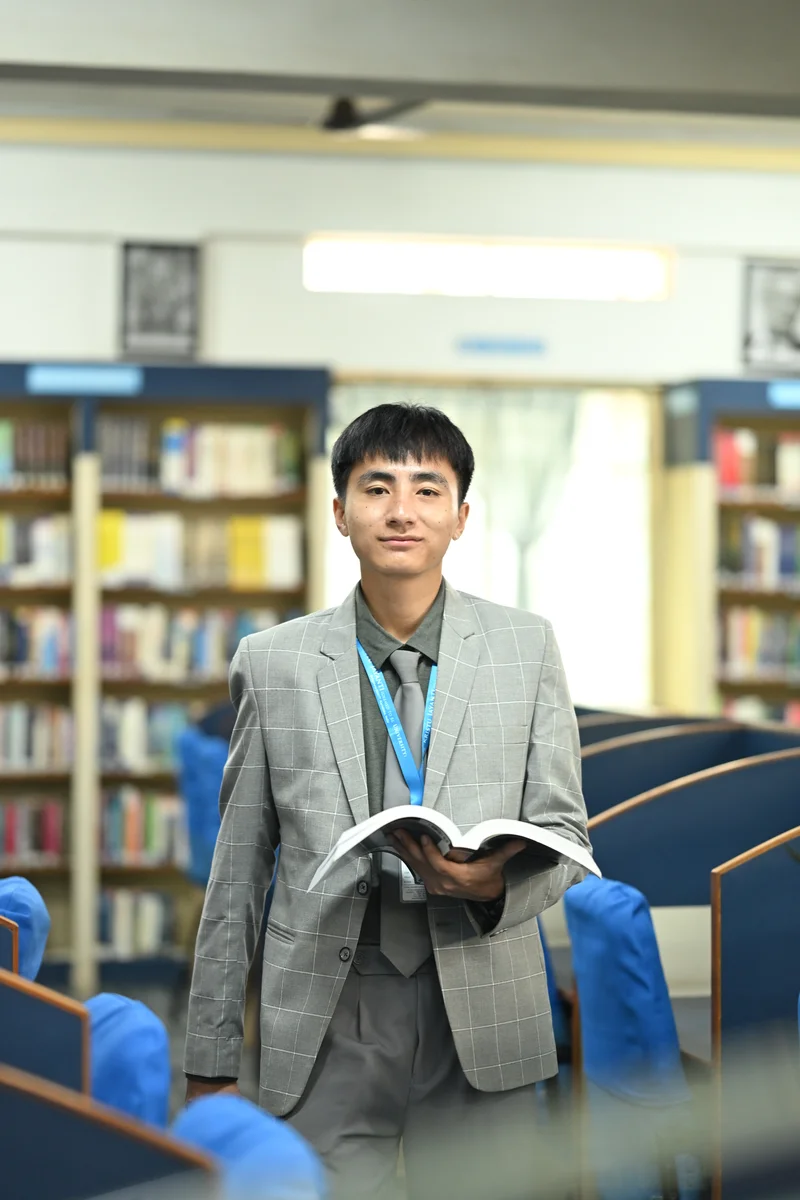
A comprehensive undergraduate pathway combining economic theory, quantitative methods, and data-driven policy applications.
Programme Title: B.Sc. Applied Economics
Specialization: Applied Economics
Duration: 3 Years
Study Mode: Full-time undergraduate programme
Core Academic Focus Areas: Economic theory, quantitative methods, statistics, econometrics, data analysis, Indian and international economics, public policy, financial economics, environmental and sustainable development, and applied economic analysis
Practical Learning: Hands-on data analysis using Excel, Stata, SPSS, R and Python, alongside internships, research projects, field visits, discussions, debates, simulations and experiential learning
Learning Pathway: Combines core economics with quantitative and interdisciplinary learning, supported by add-on courses, research activities, internships, student projects and skill-development initiatives
Review the mandatory academic qualifications and minimum score criteria required for admission.
Candidates who have completed Higher Secondary (10+2/PUC) or an equivalent examination from a recognised board with a minimum aggregate of 40% marks or equivalent CGPA are eligible for admission to the B.Sc. Applied Economics programme.
Looking for a programme that matches your interests?
Find Programmes by InterestTargeted competencies and practical mastery achieved by graduates throughout their academic journey.
PSO1: Develops the ability to apply economic principles, theoretical frameworks and analytical models to solve real-world economic issues.
PSO2: Equips students to evaluate economic policies and market dynamics using rigorous statistical, mathematical and econometric approaches.
PSO3: Hands-on data analysis training using R, EViews, Excel/spreadsheets and Python for evidence-based economic interpretation.
PSO4: Covers micro, macro, international economics, fiscal policy, environmental, gender, welfare, behavioural and financial economics.
PSO5: Acquire systematic research skills using quantitative and qualitative methods, supported by an internship and final-semester research project.
PSO6: Strengthens critical capability to interpret complex economic data, evaluate public policies and make informed decisions across sectors.
Key strengths, experiential learning, and strategic career advantages offered by the programme.
The B.Sc. Applied Economics programme combines a strong foundation in economic theory with quantitative and data-driven learning. Students gain practical experience using Excel, Stata, SPSS, R and Python, while engaging in group discussions, debates, panel discussions, field visits, internships and research projects.
Faculty mentoring and research-club activities further support students in developing analytical and research capabilities. The programme's interdisciplinary orientation and exposure to contemporary economic issues prepare students for diverse pathways in economic research, data analytics, banking, consulting, public policy and higher education.
Choosing this programme enables students to:
Key advantages of choosing this programme: